
Tjolöholm is a 19th-century Swedish estate that celebrates architecture, setting and sea, standing as a distinct example of how design philosophy can shift following a personal tragedy. Blanche Dickson had no intention of leaving anything to chance, and yet it was chance that played a defining role in her life. When she and her husband, James Fredrik, bought Overås in 1892, the land where they were to build Tjolöholm castle a few years later, she planned to transform the existing 19th-century Swedish garden into a more Victorian one, in keeping with the couple’s heritage. A conservatory and a handful of greenhouses were erected with material shipped in from London and saplings planted following the nurseryman methods of Thomas Rivers, a leading authority on roses and fruit trees. The services of architect Lars Israel Wahlman were engaged, and he submitted his proposal for the building of the castle in 1897, along with a new plan for the gardens. The proposal was, bizarrely, named ‘Hobgoblin’, in many ways a premonition of things to come: James Fredrick’s untimely death occurred just a year later, in 1898, occasioning the works to take a completely different turn.
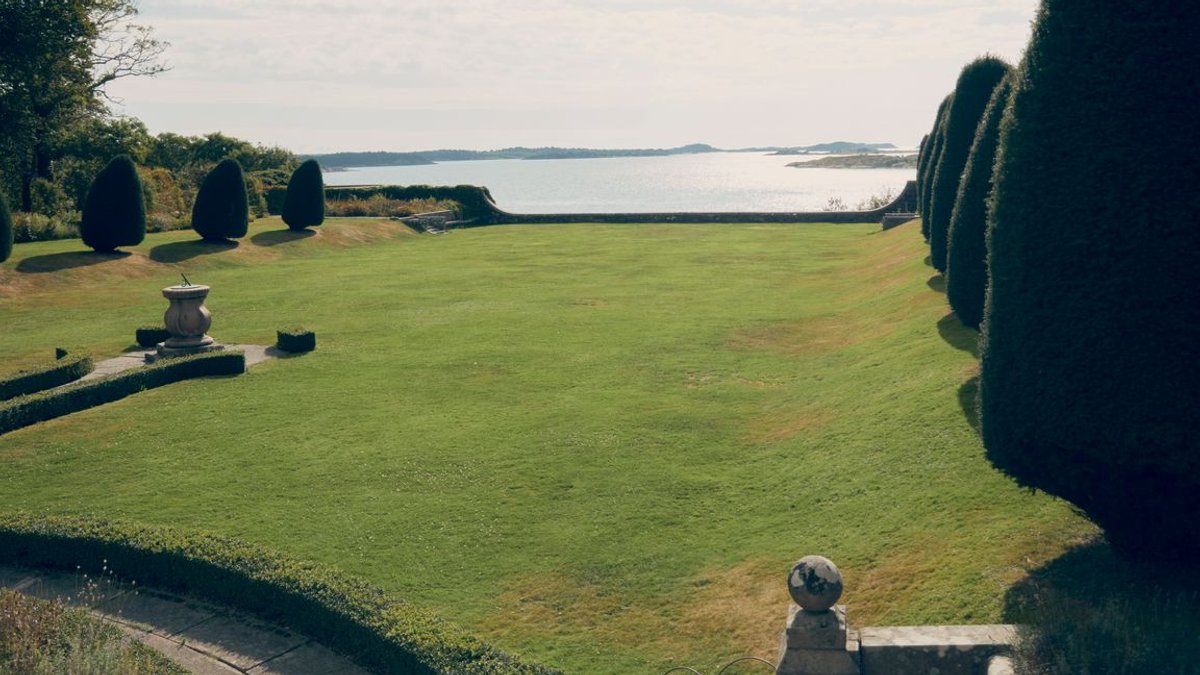
It was a bold move by Wahlman to include the garden in his proposition when it was usually the head gardener’s task to develop, but he despised the latter’s fondness for excess and exotic plants placed far from their natural habitat. He was an Anglophile and a man of the Arts and Crafts movement, and he advocated for a more harmonious relationship between garden and dwelling where one should be the extension of the other. Although heavily influenced by English ideas, he translated these to a Swedish context and chose plants adequate for the Nordic climate, namely manicured boxwood hedges and perennials, the latter chosen over annual flowers for their longevity, controlled flexibility and painterly colour gradients that would bring variation throughout the seasons. Wahlman’s material choices tended to the clean and robust – and were naturally of the highest quality. Stone walls would provide protection for the garden, creating structure and absorbing warmth from the sun for plants to grow, lean and climb on. Gravel pathways would connect the vast garden from one end to the other. A velvet lawn would be contoured into soft, wave-like shapes mirroring the nearby sea.
Related: Lluís Castaldo’s Studio Is a Bold Brutalist Breath-Taker
The newly widowed Blanche and Wahlman formed a close working relationship and the architect was given a certain degree of autonomy in design decisions and no spending cap. Despite having never actually visited Britain, he was an avid reader of The Studio – a popular illustrated arts magazine first published in 1893 – through the pages of which he made his acquaintance with the thoughts of William Morris, Gertrude Jekyll and Edward S. Prior, among others. Blanche had spent time in England during her childhood, developed a fixation with Liberty and subscribed to Country Homes. She sent their collected series of articles on gardens published in the book Gardens Old and New on the overnight train to Wahlman in Stockholm. She had marked the terraces, balustrades and walls she liked in particular and signed off with a note letting him know she was looking forward to seeing his new sketches.
Her suggestions resulted in a series of terraces and staircases tying the garden seamlessly with the wilder natural setting surrounding it. ‘It looks a little bit like they have smudged the drawing with an eraser; there is a fairly smooth transition,’ says Andreas Blomberg, one of the gardeners who looks after the estate today. Whether this was a product of revisions or artistic licence is of little importance; the result was extraordinary. In an article from 1907, after the completion of Tjolöholm castle and garden, Wahlman describes how he had feared the manor house would look merely like a regular house surrounded by cliffs. Ultimately his anxiety was unfounded: when the wings of the castle stood ready and linked arms with the newly formed terraces and flower beds, it all fell into place and the castle rose above the sea line, enfolding the garden in a perfectly executed adopt. Indoors, expanses of grass-green rugs, animal motifs, rose-pattered wallpaper and botanical tapestries reflected their outdoor opus.
Modern stewardship
While there is plenty of correspondence and sketches between Blanche and Wahlman of the initial works, less is known about their ideas for the future. Today, the gardens around the castle and the workers’ village – a hamlet of red cottages Blanche had built for the workers on the estate – are run by a team honouring the duo’s thoughts and aspirations, but they are slightly fumbling in the dark and at times have to guess as to the duo’s intentions, admits Blomberg. ‘Blanche had so many ideas, and what would have happened to the garden if she’d been able to carry on? We reckon her daughter wasn’t quite as interested in the garden as her mum was,’ he says.
Related: Eileen Gray’s forgotten Modernist gem revealed
The daughter in question was Blanche and James Fredrik’s only child, Blanche Charlotte Eleonore, who inherited the manor after her mother’s sudden death of dysentery while returning from Sri Lanka in 1906, only two years after Tjolöholm was completed. Daughter Blanche married into the Swedish noble family Bonde and carried on living in the castle until her divorce in 1920, thereafter using it as a holiday residence until her death in 1960. The cost of running the estate was enormous and at one time the Bonde family considered demolishing the property, until the City of Gothenburg stepped in and turned the grounds into a public leisure and recreation area.
In 2012, after decades of slumber, Tjolöholm was re-awoken by the newly created eponymous foundation, which took over the running of the manor and hired seasoned British gardeners Helen and James Dooley to reinvigorate the Art and Crafts garden. Flowerbeds were expanded and new trees and shrubs planted, selected for their connection to the history of the castle, such as acanthus and woolly thistle. Blomberg, who joined the foundation at its inception, saw the resurrection first-hand. Years later, the gardeners still work in the same spirit. The idea is to have plants that can stay in the ground all year and develop and expand over time in harmonious colours. ‘We focused first and foremost on perennials and roses – roses are something you should have plenty of,’ he says and explains that otherwise there is no strict protocol.
Related: Explore 28 Cozy Winter Bedding Ideas Before Cold
It is not uncommon for historic estates to lose momentum after the original visionary passes away, often leading to a gradual decline or a shift toward a purely commercial focus. In this case, the transition was even more abrupt, as the estate changed hands between family members and eventually to a city government, creating a vacuum in leadership. The resilience of Tjolöholm over the last century suggests that the physical structure of the gardens—those boxwood hedges and stone terraces—provided a strong enough skeleton to support new growth, even when the original plans were left unfinished. The current team continues to rely on that robust framework rather than trying to reconstruct a history that is largely lost to time.
The last meeting between Blanche and Wahlman was when Blanche invited the architect to experience the beauty of the flowering terraces in September 1904. It would mark the end of their collaboration; when she died two years later, the garden was still young and many ideas never reached fruition. The two had formed an unusual coupling in the realisation of Tjolöholm, and despite the many misfortunes and quirks of chance encountered along the way, they succeeded – in no small part thanks to Blanche Dickson’s unwavering faith in her plans.


