
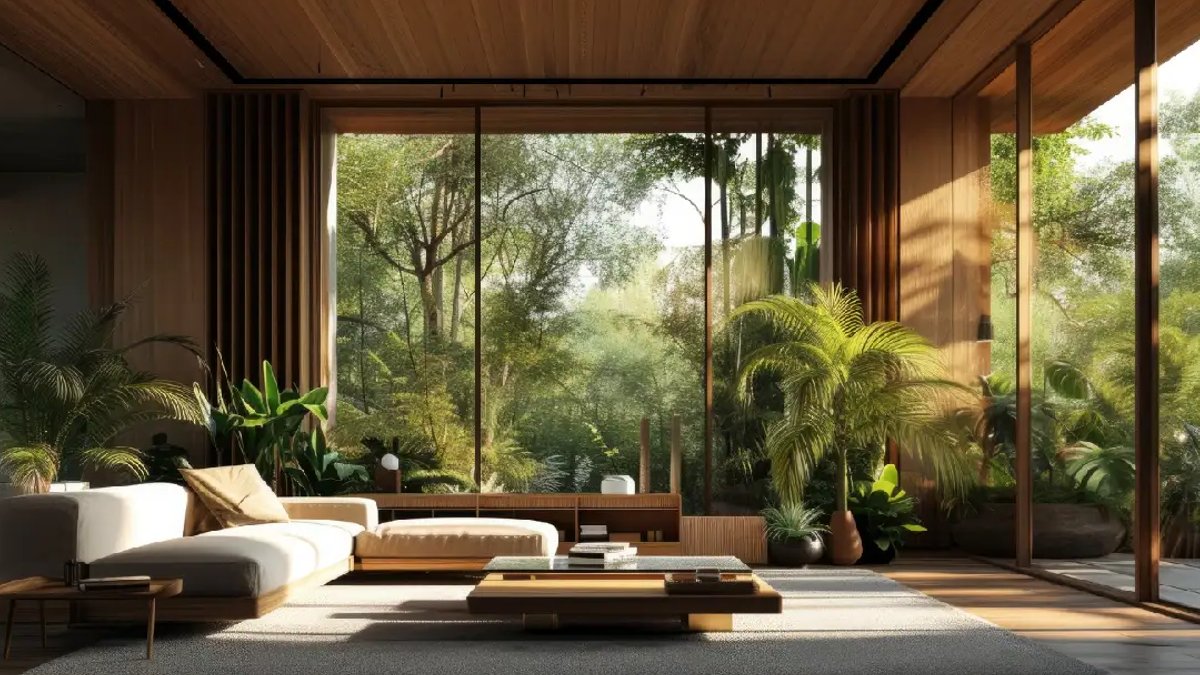
Design guidance highlights a shift toward indoor-outdoor living, where the boundary between interior rooms and exterior spaces is deliberately softened.
Homeowners are seeking a closer connection with nature and a more open layout, whether they occupy a compact city flat or a rural cottage.
Floor and material continuity
Choosing similar colours and textures for flooring helps tie the two zones together. Large-format tiles inside can flow into composite decking outside, offering a subtle visual link without an exact match.
Materials such as rattan, linen, stone and timber-inspired surfaces perform well in both settings, reinforcing a cohesive aesthetic.
Opening the space
Installing sliding or bi-fold doors creates a wide, uninterrupted opening that merges the living area with a garden or terrace.
If full doors are not feasible, large windows, a kitchen pass-through hatch, or strategically placed mirrors can draw the outside view inward.
Extending function and comfort
Replicating indoor uses outdoors enhances continuity; an interior dining room can be complemented by a matching patio table, while a reading nook can inspire a garden lounge with a chair, side table and soft throw.
Lighting follows the same layered approach. String lights, lanterns and uplighting echo indoor fixtures, and smart or dimmable controls can be mirrored outside for a unified ambience.
Seasonal shelter expands usability. Pergolas with retractable roofs, sail shades or glass canopies protect against sun and rain, while fire pits, patio heaters and outdoor rugs add warmth for cooler evenings.
Privacy can be achieved without solid walls. Green screens made from hedges, bamboo or vine-covered trellises form cosy garden rooms, and balustrades, railings, or raised planters can subtly mark boundaries without visually closing off the space.
When the outside area remains usable year-round, the perceived size of the residence expands, reinforcing the seamless connection between the two environments.


