
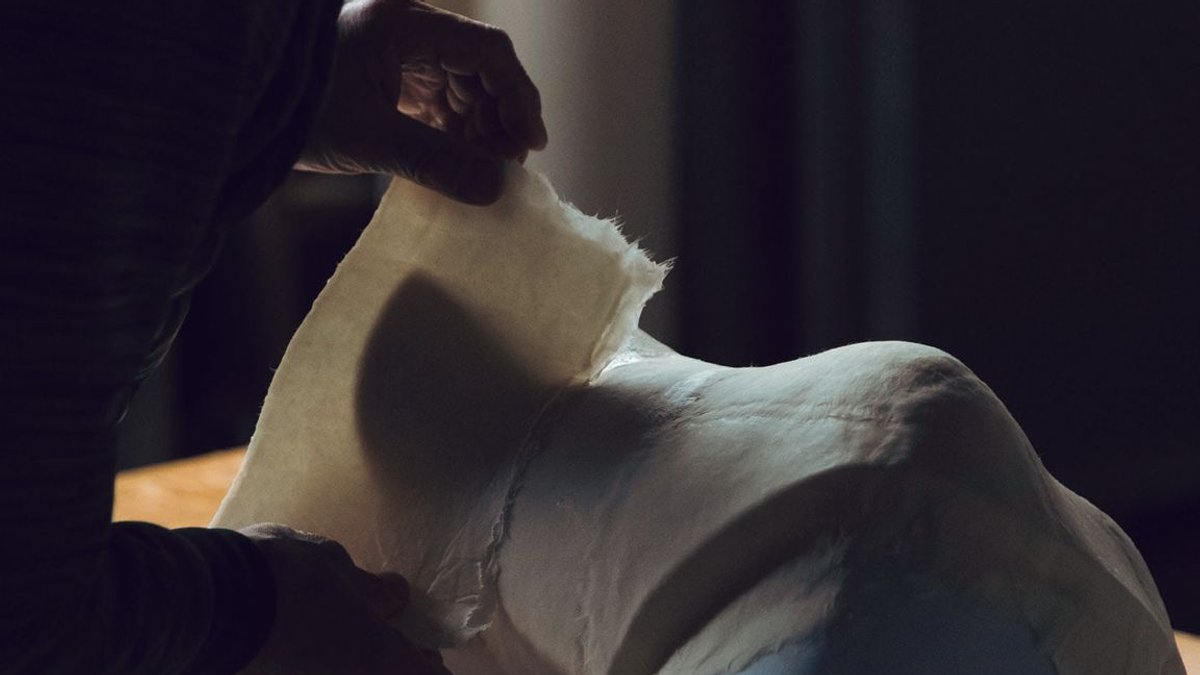
Issey Miyake’s legacy of rethinking how clothing can be made continues with a fresh reinterpretation that swaps the designer’s iconic plastic bustiers for lacquered washi paper, a shift unveiled in the brand’s upcoming “Urushi Body” collection.
From plastic to paper: a new material language
In 1985, the “Body Works: Fashion Without Taboo” exhibition at London’s V&A showcased Miyake’s “Plastic Body” bustiers, molded from glass‑fibres and polyester resin. Those pieces, described at the time as “jewel‑toned” and futuristic, challenged conventional ideas of fabric by turning synthetic material into wearable art. Forty years later, Satoshi Kondo, who now heads the women’s line, has taken the same conceptual thread but anchored it in traditional Japanese crafts.
Related: Lydia Corbett: Artist and Muse in Provence Home
Kondo’s autumn/winter 2026 runway featured model Kayako Higuchi stepping onto a carpet of shimmering dust, clad in a single sheet of white paper‑cotton cloth supported by a matte “eggshell” bustier. The garment, part corset, part obi sash, belongs to the “Urushi Body” range, which offers a waist piece and a bustier in four colourways. While Miyake’s original bustiers emphasized a sleek, futuristic aesthetic, Kondo’s versions feel more grounded, reflecting a blend of ancient technique and contemporary design.
Crafting the “Urushi Body” pieces
Artisans in the Echizen region of Fukui prefecture create the new pieces through a labor‑intensive process. Large sheets of washi paper are hand‑torn, then layered on 3D‑printed moulds using five blankets of natural glue. Multiple coats of lacquer, harvested from the urushi tree in Kyoto, seal the paper, giving it a supple sheen that belies its delicate origins.
“Oftentimes people from outside Japan view lacquerware as a craft object, something that you would put on a shelf to look at. But it is something held in our hands, connected to our bodies,” Kondo explains. His childhood memories of lacquer bowls and tiny ochoko cups inform the tactile quality of the final product.
Related: Ski lodge redefines mountain home design
The resulting bustiers and waist pieces retain a muscular silhouette, yet when handled they reveal a softness that surprises the wearer. “There is this ‘Aha!’ moment when you realise they’re made of paper,” he notes, adding that the matte texture “deceives you.”
Historical context and future outlook
Issey Miyake’s early collaborations blended cutting‑edge textile innovation with global influences, from African djellaba robes to the concept of a universal wardrobe. Musician Jon Hassell, in the 1983 “Body Works” catalogue, linked Miyake’s vision to a “Fourth World” movement that merged African and futurist aesthetics, noting that the designer looked “straight ahead into an era in which sensuality and beauty regain their rightful places alongside structure and function.”
Today, the “Urushi Body” line continues that dialogue, abstracting representations of the female form found in classical sculpture and modern digital imagery. Yet, as Kondo emphasizes, the pieces are neither direct replicas nor mere echoes of past ideals. “I think what’s more important is to see and present clothes as the means through which you can impart a new perspective of looking at other things,” he says.
Related: New Hub for Blue Tech Industry Emerges
The collection’s reliance on both ancient hand‑craft and modern 3D‑printing illustrates a fusion that keeps Miyake’s experimental spirit alive while anchoring it in a distinctly Japanese context. As the pieces move from runway to museum, they will likely sit alongside Miyake’s original bustiers, offering a comparative lens on how material choices reflect changing attitudes toward the body.
Both the historic plastic bodices and Kondo’s lacquered paper garments have secured places in major museum collections, confirming their status as art objects as much as fashion items.


