
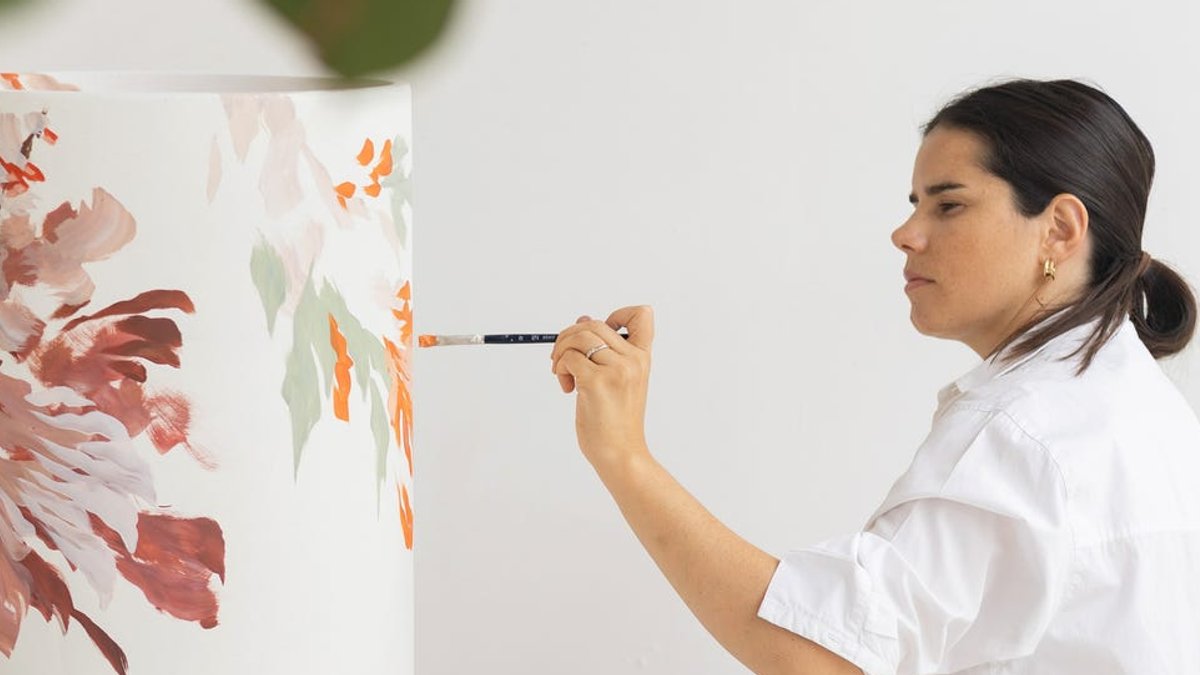
The bathroom is becoming as much a place of feeling as it is function. Yes, there will always be important practical concerns to be considered but, increasingly, they are being matched by a demand for personality, atmosphere and that special something. Offering customised fixtures and fittings is not a new idea, but it does seem like there is a fresh desire for innovation in the air; a sense that anything is possible and everything should be explored.
A New Era of Customization
Brands like Vola and Dornbracht have enabled customization for decades, allowing adjustments to tap designs since the 1960s and 1950s, respectively. However, requests for modifications have intensified, reflecting a broader shift in luxury bathroom design. The transition from standard offerings to spaces that prioritize individuality highlights this evolving trend.
Grohe’s Icon 3D collection exemplifies this trend, enabling customers to 3D-print in metal one-off or small numbers of unique designs. “There are no limits set for individual personalisation,” says the brand, which adds that it offers the opportunity to create taps that “at first appear impossible.” To realize such innovations, companies like Dornbracht have introduced initiatives like Atelier, which challenges traditional boundaries. “We learnt that if we present something special, it becomes a starting point for other designers,” explains CEO Caroline Schmitt.
Pushing the Boundaries
The Atelier range, launched last year, has inspired architects to explore unconventional ideas. One such designer, Fabian Freytag, reportedly struggled to sleep after seeing the collection, as it sparked concepts he once deemed unachievable. His creation, showcased during Milan Design Week, is colourful, blocky, playful and 100 per cent would only have come from his mind. “If bespoke is about no longer having to settle for what comes as standard, then we are reaching a new level of understanding what that means,” Lennon observes.
Customization now extends beyond structures to materials and details. Homeowners might request knobs inset with meaningful precious stones, initials embossed on fixtures, or basins hand-painted by artists. “Complete uniqueness, requested for so long in other areas of the home, has become the new benchmark,” Schmitt notes. Some designs remain so secretive they cannot be disclosed, while others, like bespoke colorways for Soho House, refine existing collections to fit specific projects.
Challenges in bespoke production often yield memorable results. “The best interiors often begin with an idea that does not fit neatly into a catalogue,” says Grazziella Wilson, group brand director at Ca’ Pietra. Such projects highlight the freedom bespoke fabrication provides to align with architectural vision.
Related Post: ELE Interior expands global design services
Balancing Innovation and Practicality
Nevertheless, bespoke design requires balancing creativity with quality. “Bespoke should not mean accepting every instruction without question,” cautions Keeley Sutcliffe, design manager at BC Designs. She warns that certain finishes, while visually appealing on small samples, may falter on larger surfaces. “Highly reflective or specialist decorative finishes can expose every slight variation in the surface,” she explains. BC Designs’ ColourKast finish, however, allows roll-top baths to be painted in any color, addressing the long-standing expectation of white bathroom fixtures.
“A bathroom is often one of the smallest rooms in the house, but it can have the biggest personality,” asserts Lee Thornley, founder of Bert May. The details that make a bathroom memorable, he argues, are what transform it into a reflection of personal identity. As Lennon concludes, “It transforms a space from something you use into one that reflects who you are.”
Bespoke Collaborations and Artistic Expressions
Specific projects highlight how bespoke design merges creativity with technical precision. For Soho House, Lee Thornley refined colorways of his Redchurch Street collection to harmonize with project-specific tiles. “It was about refining the details so the tile felt like it genuinely belonged in that project,” he explains. Requests often include matching existing furnishings or recreating historical designs from single remnants, adding complexity to production.
The interior-design studio De Rosee Sa collaborated with Ca’ Pietra for this year’s Wow!house bathroom, creating a porthole window with integrated soap dishes and fan-shaped stone detailing. Grazziella Wilson, group brand director at Ca’ Pietra, notes that “the best interiors often begin with an idea that does not fit neatly into a catalogue.” Such projects showcase how bespoke fabrication aligns with architectural vision without compromising functionality.
Quality and Practical Considerations
Balancing creativity with quality remains a key challenge. Keeley Sutcliffe, design manager at BC Designs, warns that “bespoke should not mean accepting every instruction without question.” She highlights that highly reflective or textured finishes may reveal surface imperfections or hinder hygiene.


