
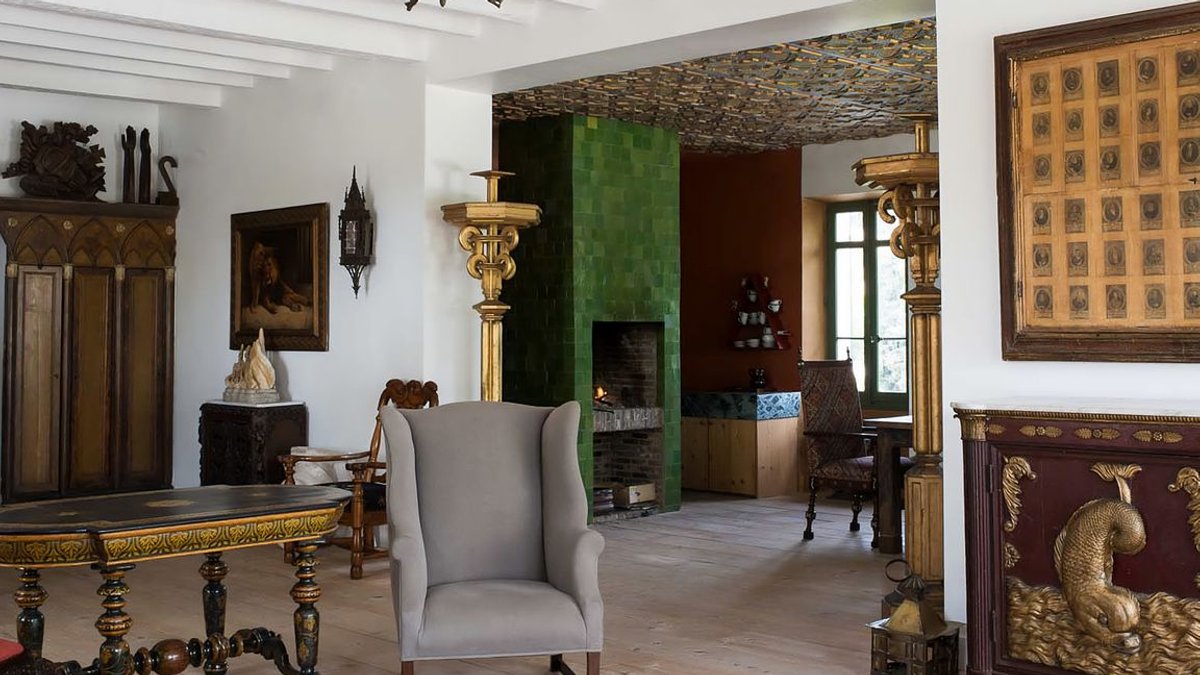
Belgian antique expert Paul De Grande has established a personal retreat in the South of France. The move comes after years of prominence in Flanders, where he became a well-known figure on television screens. De Grande recently completed the renovation of a home there, marking a new chapter for the dealer.
He is frequently recognized for his appearances on the program Stukken van Mensen. The broadcast features people bringing objects to a studio to sell to six antique dealers. De Grande often dominates the screen with his mischievous personality. His resemblance to Belgium’s Prince Laurent has also made him a distinct presence in the media setting.
His success was not immediate. De Grande is described as a quintessential self-made man. He worked his way up through the industry to eventually purchase the Castle of Snellegem near Bruges. He filled the historic structure with antiques and built an international clientele.
A History of Surprises
A visit to the castle decades ago revealed his tendency to defy expectations. In 1986, guests arrived to photograph the property for a magazine. They were startled to find a recently renovated attic. The space held no antiques. Instead, several ‘Torso’ armchairs by Paolo Deganello were arranged in a minimalist room.
Related: Island Retreat Blends Medieval and Brutalist Styles
De Grande later sold the castle. He moved into Memling House, an elegant Neoclassical mansion located in the heart of Bruges. Friends who had known him for nearly half a century thought they understood his trajectory. He surprised them again with the news of the French property purchase.
The renovation of the house in the South of France is now almost finished. It is a location where he can relax. The home is far removed from the blinding spotlights of television studios. Its architecture is elegant and understated.
For a dealer who has spent a lifetime curating spaces for public consumption, this renovation represents a final, personal statement. The transition from the castle to a private house suggests a shift that is towards personal comfort without abandoning the aesthetic discipline that defined his career in Belgium.
Specific Touches in the Interiors
The house serves as a backdrop for his collection. It was expected that he would not renounce his passion for antiques entirely. Several eye-catching pieces made the journey south from Bruges. These include a richly carved wooden panel featuring masonic symbols.
Related: Ishkar founders forgo ceilings in radical Columbia Road revamp
The living room features a prominent addition. The panelling of a 19th-century Neo-Gothic library takes up the entire back wall. A large quantity of 18th-century chairs were also brought to the home. These items anchor the interior in the dealer’s history.
One of the most striking features is in the kitchen. The room contains a fireplace with a wall clad in green glazed tiles. The design is reminiscent of a Swedish stove. The unit doubles as a grill, providing a functional element to the decor.
Color plays a role in the design scheme. The green tiles offer a bright contrast against the otherwise white walls. A similar contrast is found in the master bedroom. It is painted a fiery red, a color that extends into the adjoining bathroom.
The upper floor provides space for leisure. There is enough room under the beams for a billiard table. Several guest rooms are also located on this level. Despite the French setting and the owner’s name, the signature style of the Flanders-born dealer is clearly recognizable throughout the house.


