
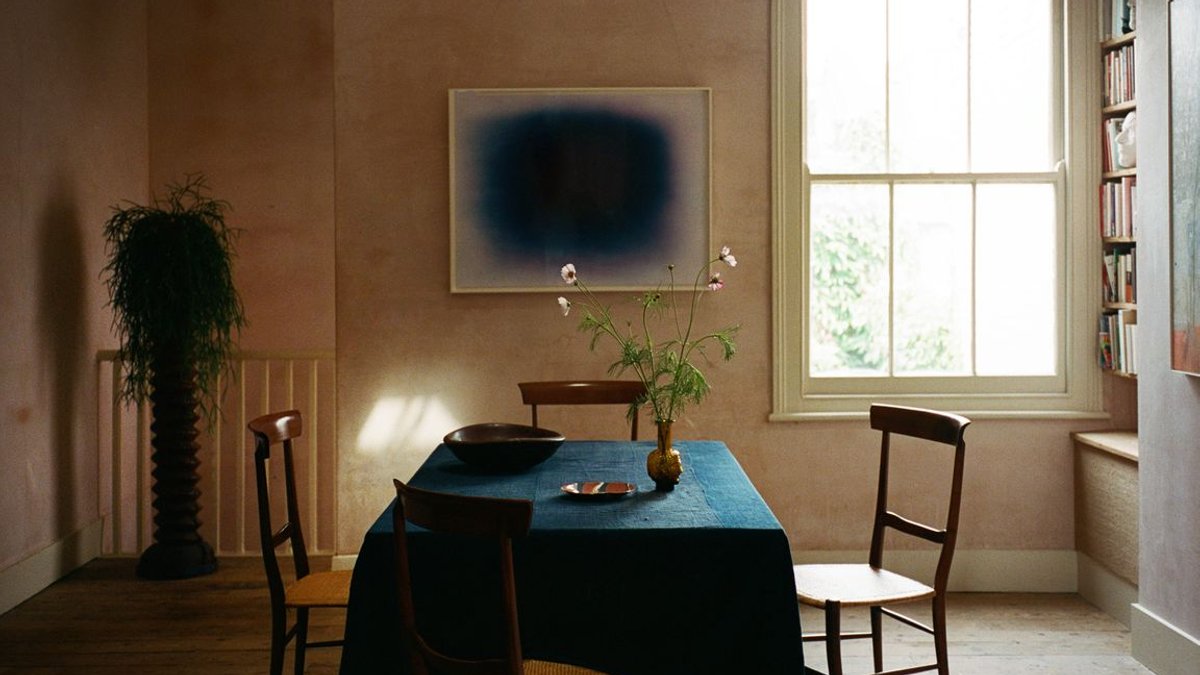
The Ishkar founders forgo ceilings in this radical Columbia Road revamp.
A gentrified gem in East London
If a competition were held to name London’s most dramatically gentrified neighbourhood, Columbia Road and the streets forming the adjacent Jesus Green Estate in E2 would have as strong a claim on the title as any other postcode. This is a serious matter because there could be a new branch of Gail’s at stake. In the early 1990s, this small pocket of Bethnal Green hitherto more closely associated with Ronnie and Reggie Kray, those ‘lovable’ local rogues, started to generate a bit of a buzz, chiefly on account of the renascent weekly flower market, which draws hordes of people every Sunday and does a roaring trade in gerberas and, more recently, fiddle-leaf figs.
At kitchen suppers across London, tales are told of prescient settlers who bought one of the dinky 1860s terraced houses on Quilter Street for £60,000 not that long ago. Guests are agog, polenta is spluttered. ‘£60,000? But they’re £90,000 now,’ they chorus. ‘It’s madness!’
Related: London’s Best Design-Led Restaurants
In no time at all, Columbia Road and its environs went full urban village, a bit Richard Curtis-does-Cockney. The Bugaboos rolled in like Soviet tanks, cappuccinos made their debut on menus (this was the 1990s), window- and doorframes eventually got a coat or two of Farrow & Ball’s ‘Downpipe’, the Remodelista-reading classes’ colour of choice. Alarmingly – and does anything illustrate the insanity of the capital’s property market quite as starkly as this? – those same diminutive Victorian cottages with front doors straight on to the pavement routinely fetch well over £1 million these days.
Preserving the bones of a historic home
It is here, in this cute little enclave within easy walking distance of the City and urban essentials like St John Bread and Wine, that we find the two heroes of this particular tale, a young couple who could be the poster boy and girl for the East End of the 2020s, with their good looks, adorable offspring and stylish sustainable business/social enterprise. Although the world knows them as the founders of Ishkar, a shop selling artisanal rugs and goods from Afghanistan and beyond, they prefer not to be named here.
He is London born and bred; she is French. Then unmarried and childless, both were living separately in the area and so smitten that they were loath to leave. It was Bethnal or bust; my way – Columbia Road – or the highway. They lucked out when a terraced house a matter of yards from their shop and their storeroom came on to the market.
Now, in interiors stories it’s customary at this point to list all the horrors that awaited the intrepid new home-owners: the florid carpets glued to floors that would be peeled away over the course of torturous long nights; the polystyrene ceiling tiles that had to be scraped away with nothing but bare teeth and good old-fashioned grit. But thankfully our duo were spared such evils, although the place wasn’t without its quirks.
Related: Beautiful Fabric Pairings for Home Decor
‘It had an enormous bathroom – one of the biggest bathrooms I’ve seen in London – and it had two armchairs in it,’ says the husband. He quickly adds that the previous owner, a woman called Lucy, was an artist, hence perhaps the bohemian ablution arrangements with scope for spectators. Prior to that, back in the road’s down-at-heel days, it had been home to a family of 15, so his own clan still has some way to go (he and his wife are currently at child number three) before they’re truly bursting at the rafters.
Speaking of which, one of their most inspired interventions has been to knock out the ceiling in the first-floor living room (they’d inherited the upside-down layout not uncommon in these parts), to create an expansive, vaulted space where even he – a strapping 6ft 5ins – can stand without having to stoop, which is something of a novelty for him. Furthermore, the new bathroom, which is covered in tadelakt plaster, features a 19th-century clay-fired tub – ‘one of my favorite things in the house’ – that is two metres long, so he no longer need concertina his limbs every time he takes a soak.
The family’s accomplice in all this was the architect and interior designer Manfredi Villarosa, of Studio Villarosa, who is not only a good friend but completely attuned to their aesthetic and a total whizz at magicking space where there was none, squeezing in an office and extra berths on the ground floor, for instance. Out back, part of the side return has been sacrificed for a bedroom, giving them three in all, and what is left of it now forms an enclosed riad-style internal courtyard accessed by french doors from that principal suite.
Related: Seasonal Bedding Color Schemes to Try Now
Once upon a time, the Bethnal Green and Shoreditch areas were furniture-making central – in fact, this particular house used to be connected by an arch to a woodworking workshop behind – and so it is perhaps only fitting that the interior throughout should feel so very crafted, with an emphasis on artisanship and reclaimed materials. Accordingly, salvaged pine boards and cut bricks cover floors, antique parquet panels have been given a highly inventive new life as kitchen cupboard doors, plasterworks by WoI alumna Viola Lanari sit against bare-plaster walls, and Kirsten Hecktermann fabrics hang at windows. The whole effect is Mid-Century Modern meets Morocco, I guess.
‘How to describe it succinctly?’ says the husband. ‘I guess it’s all based around a love of craft and texture. We really look for texture and, in all the design choices we made, the objects and finishes have a kind of lived-in quality. Every part of the house has a kind of handmade feeling. And that’s very much a shared aesthetic of Manfredi and ours.’
Certainly the end result is beautifully considered and hushed, serene even, with no hint of there being three young children in residence here, nor of the commotion just the other side of their front door every Sunday, when the street is thronged. Not that they’re at all fazed by that. In the few years they’ve lived here they’ve befriended the flower sellers and relish the instant atmosphere that waits them on their doorstep. ‘I think there are only 12 families that actually have the right to sell flowers in Columbia Road. We have a really nice relationship with them. They’ve seen all our children growing up. They give us flowers every Sunday and we have a nice chat and they always notice when we’ve been away. So it doesn’t feel like some of those transient commercial markets. Anyway, it’s great people-watching – plus people behave differently when they’re around flowers, I think. They’ve soothing.’


