
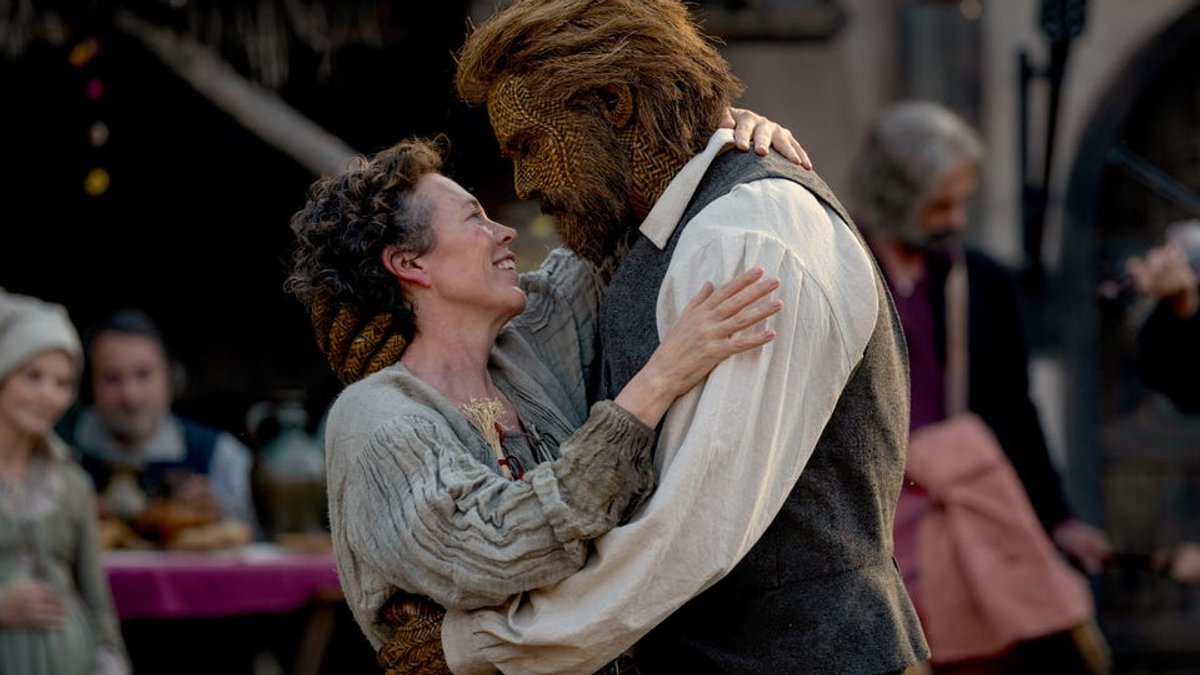
The romantic comedy Wicker is out in theaters today, starring Olivia Colman and Peter Dinklage. The film is based on Ursula Wills’s short story “The Wicker Husband.”
Behind the wicker transformation lies Wētā Workshop, a New Zealand-based design and effects company known for The Lord of the Rings and Avatar.
Wētā Workshop’s Wicker Transformation
For prosthetic makeup designer Joe Dunckley and lead makeup effects artist Sarah Rubano, the assignment was to turn Alexander Skarsgård into a convincing wicker husband without losing the expressions that make him recognizable.
The team dedicated 18 months to developing and crafting his suit and facial prosthetics, converting his features into a woven material, including his prominent furrowed brows.
Approximately 95% of the prosthetic and fabricated suit utilizes 3D-printed material. While typical prosthetics mimic human skin, this wicker husband required a non-biological material, prompting them to seek an alternative solution.
Read Also: Designer’s Long Island Home Transformed Over Four Decades
They encountered limitations with existing software and had to develop custom code for weaving. The detailed geometry of weaving posed significant challenges for 3D sculptors.
These prosthetic appliances were directly printed, bypassing the traditional mold-making process.
Approximately 50 individual components were sewn and secured onto thin spandex or mesh on Skarsgård’s body. The facial area, including the wig, comprised about 10 pieces, with foam latex used for lips, eye bags, and the underlip and chin section.
Weaving the Wicker Husband
They had a team of weavers who had just come off Avatar, where they’d been weaving costumes for the Na’vi. Their design team would block out the shapes that they liked, and their lead weaver would do a physical weave sample using flax, giving them those shapes.
They printed prototypes, conducted makeup tests, and identified issues: some pieces were too loose, others too tight and restrictive. Adjustments were made for better mobility, gradually refining the final film design.
Read Also: Leset’s New LA Office Merges Vintage and Modern Design
A key goal was ensuring Skarsgård’s presence remained evident through the makeup. His striking handsomeness and unique, recognizable expressiveness were essential to preserve.
They wanted to get those qualities into the weave. It was a matter of deconstructing what it is about those expressions that are endearing, that are heart-melting, and then reconstructing them in a weave pattern and enabling that movement for him through the prosthetic.
Preserving Skarsgård’s Expressiveness
They got the whole morning process down to an hour and a half. That was the brief at the beginning, because he was working every day. It was an ambitious shooting schedule, so all the build techniques supported being able to expedite it.
He would come in, and they would put on a partial fabricated undersuit. He would come to the makeup chair, then go back and get more of the body suit on. Then they got into gluing the appliances to his face, the eyelashes, the wig, the styling, the makeup around the eyes—all the finishing touches.
About halfway through, once they were really confident with their processes, they started giving him a bit of relief at lunchtime. Rubano would take off the eyelashes because they’re quite robust, and he’s not used to wearing fake eyelashes. They would wrap up his beard and put a little bib over it so he could eat and be comfortable. They’d take off the gloves—just all the things they could do to give him some reprieve. After lunch, they’d build him up 100% again. The cleanup at the end of the day was about half an hour. The real challenge was keeping him cool. He runs hot, so they had fans and ice packs.
Read Also: Cotchford Farm, Winnie-the-Pooh’s Inspiration, Celebrates a Century
They’ve built so many different types of characters for so many different types of films over 30-plus years. Sometimes they strike a chord as hoped, sometimes they don’t. Sometimes the chord has been struck louder than you could ever have expected. This is an example of that.
A Meticulous Makeup Process
The team at Wētā Workshop faced a unique challenge in bringing the wicker husband to life. They had to ensure that Alexander Skarsgård’s distinctive features and expressions remained recognizable, even through layers of prosthetic makeup.
The wicker husband has become a phenomenon, sparking online chatter and memes.
Behind the Scenes: Crafting the Wicker Husband
The creation of the wicker husband character in Wicker involved a meticulous process. Initially, the team sought concept art to illustrate their vision for potential cast members. This led to the central question of how to physically bring the wicker husband to life, as his success was deemed key to the film’s overall impact. From the start, the goal was to create a physical prosthetic character, blending practicality with artistic vision.


