
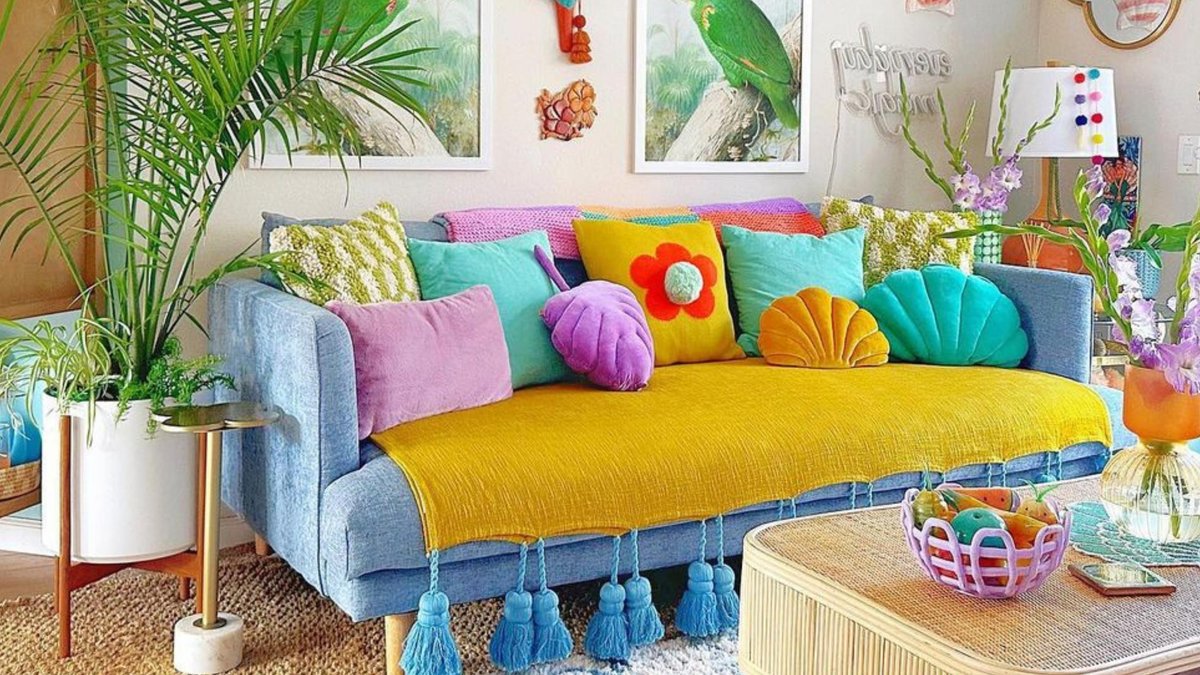
When homeowners weigh a colorful or muted interior design for a single living area, the visual shift can feel like stepping into two distinct rooms.
Bright pigments energize the space
A room painted in sunny yellow and turquoise instantly lifts the mood, making gatherings feel more lively. The vivid backdrop encourages conversation and draws the eye to decorative accents.
Designers often pair bold walls with playful throw pillows, patterned rugs, and artwork that adds contrast. These pieces act as focal points, turning ordinary furniture into statements.
Texture also plays a role; glossy finishes beside matte fabrics create visual interest without adding more hue.
Soft tones promote calm and flexibility
Switching the same walls to a palette of beige, soft gray and cream produces a soothing environment that feels larger and more airy.
Subtle backdrops let natural light dominate, highlighting the gentle variations in material. Wooden furniture, woven baskets and ceramic vases become the room’s main attractions.
Because the base is understated, they can layer different textures—linen throws, plush rugs, brushed metal lamps—to add depth without clutter.
These muted surroundings are often chosen for spaces intended for relaxation, where overstimulation could be counterproductive.
In practice, the balance between hue and material can be adjusted with simple swaps, such as exchanging a bright cushion for a neutral one or adding a colorful vase to a calm setting.
Both approaches rely on the same structural elements—sofa, coffee table, lighting—yet the emotional impact diverges sharply.
The choice between a vivid or soft scheme often reflects how occupants plan to use the room, whether for social gatherings or personal retreat. A brighter setting can signal openness and energy, while a softer scheme suggests privacy and steadiness.
Homeowners who favor flexibility may keep a subtle base and introduce hue through interchangeable décor, allowing seasonal updates without major renovation.
Ultimately, the decision rests on personal taste and the desired atmosphere. Whether a room bursts with energy or whispers calm, the underlying layout remains the same, proving that style is often a matter of surface treatment.


